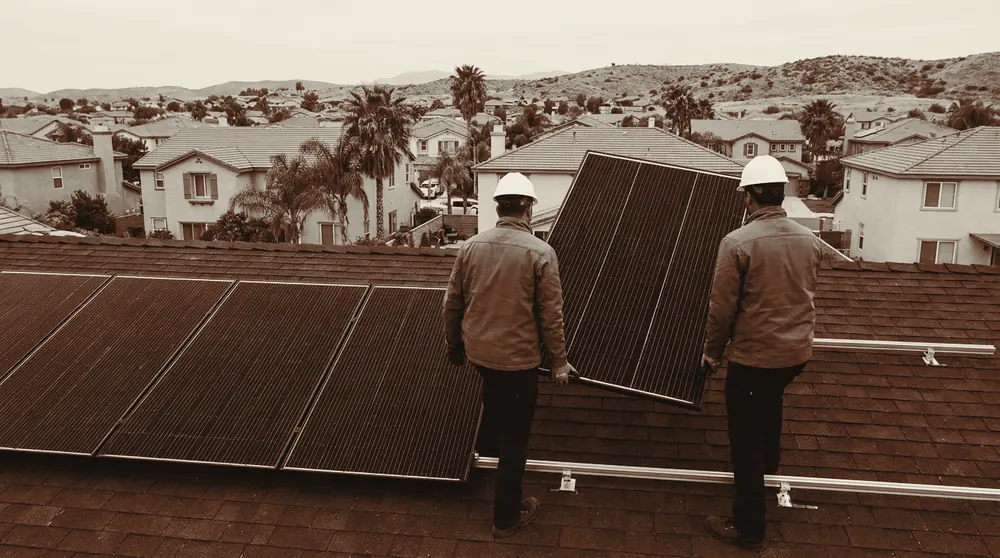
Six steps get you from a conversation to a working system. Before any of them, here's what you're actually agreeing to.
The system on your roof isn't something you buy. Skyline designs and installs it, but the agreement is with GoodLeap or LightReach, the company financing the system, not with Skyline. The system stays on your roof, and you buy the power it produces under agreed terms, instead of buying that portion of your electricity from your utility. You never take title to the equipment. It belongs to the finance company for as long as the agreement runs.
This kind of agreement has a name: a power purchase agreement, or PPA. You'll see those two letters on the paperwork, so there's no reason to meet them for the first time when you're about to sign. It's not a purchase, and it's not a lease either. A lease charges a flat rent for the equipment whether it produces power or not. A PPA charges for what the system actually makes. It isn't a loan either. With a solar loan you borrow the money, buy the system outright, and owe the balance whether the panels perform or not. Under this agreement you are not borrowing and you are not buying.
There is no purchase price, because you are not buying the system. That is not the same as saying a solar project never costs a homeowner anything. Whatever your specific house might need before a system can go on, roof condition, or where a battery physically fits, is a separate question, and it belongs to Skyline's team rather than me. The site survey below is where that gets settled. I don't have that answer, and I'm not going to guess at one.
Here's the part most solar pitches skip past: you don't own what ends up on your roof. I'd rather you hear that from me here, first, than notice it three years from now. A system you didn't have to buy, and a system you don't personally own, are both true at once. It's worth sitting with both instead of just the first.
The utility bill doesn't go away, either. You'll still get one. Part of what you'd otherwise buy from the utility, you're now buying from this system instead.
This agreement runs for a long time. It's the kind of document that gets signed at the end of a long afternoon and read properly much later. Read it first, and take the time. The questions worth asking while you read are on their own page.
The agreement doesn't end when you decide to sell the house. What happens to it at that point has a real answer in the paperwork, and it's worth asking about directly instead of assuming.
None of this is the rate you'd pay, how long the agreement runs, or whether the payment changes over time. Those numbers are specific to your house and your usage, they come from Skyline's licensed team at your assessment, and they never come from me. On that third one, ask it as two questions rather than one: what is the payment in the first year, and what is it in the last year of the agreement. Get both answers before you sign, whatever they turn out to be. My job stops at getting you in front of the people who can answer them. Here's how that happens.